
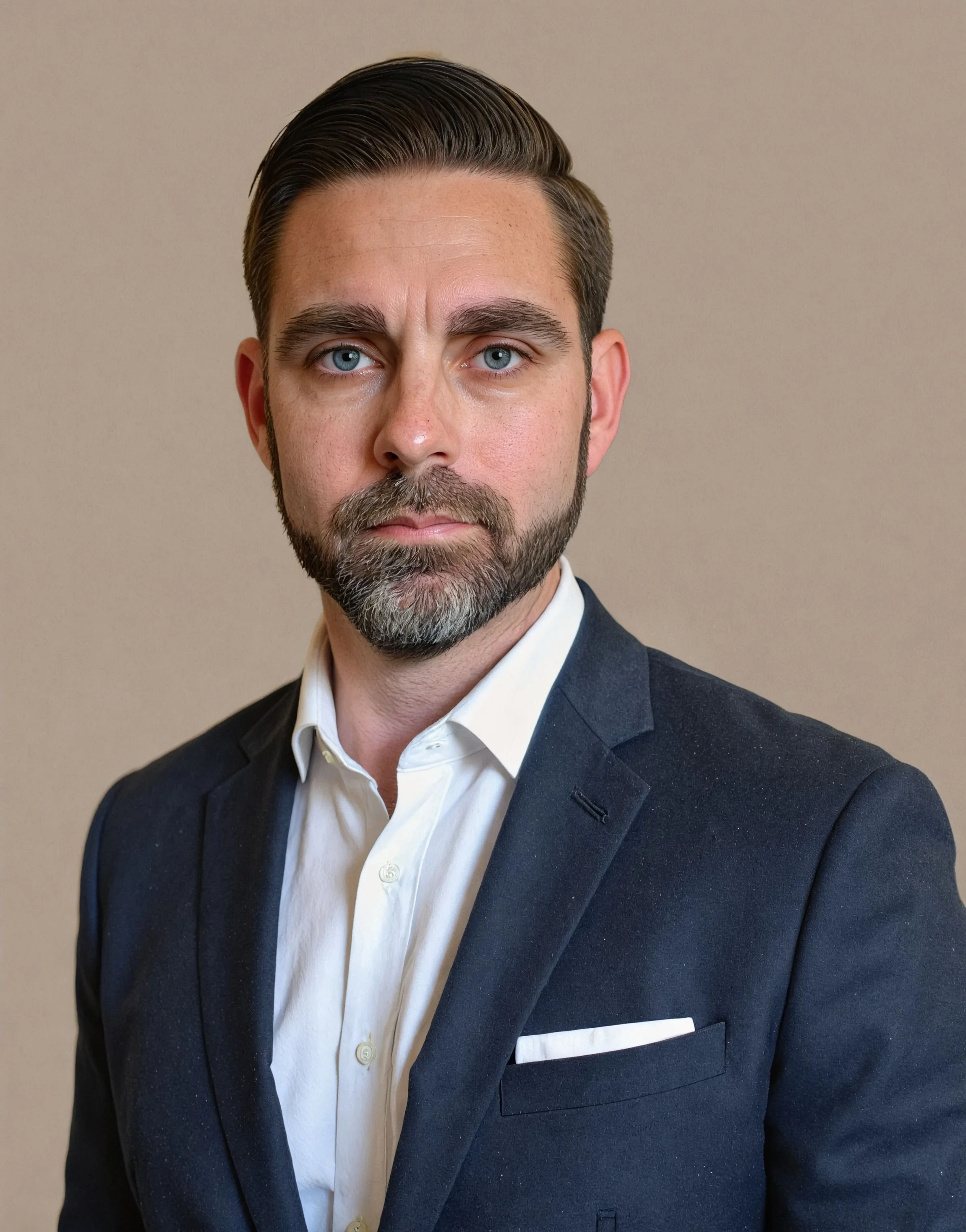
Matthew Wehling
Founder and Chief Investment Officer
M.S. Financial Management
Boston University Metropolitan College
About Me
From a young age, I had only one goal: to become a United States Marine. That ambition led me into service shortly after the September 11 attacks and eventually into a career in public service after leaving active duty. The Marine Corps shaped me profoundly, instilling discipline, resilience, and a deep sense of responsibility. But while my attention during those years was on service rather than finances, I carried with me a simple lesson from my parents: always spend less than you earn, and save the difference.
When I transitioned out of the military, I had managed to put aside a modest sum. I realized that if I wanted to build a secure future, I needed to do more than save—I needed to learn how to invest intelligently. With little background in finance, I began studying the writings of successful long-term investors, particularly Warren Buffett and Charlie Munger, whose approach to investing resonated with me.
What I discovered wasn't simply a collection of techniques for selecting stocks. It was a framework for thinking rationally about businesses, capital, and risk. The central idea is remarkably simple: when you purchase a share of stock, you're acquiring an ownership interest in a real business, not merely a ticker symbol whose price fluctuates on a screen. The value of that investment ultimately depends on the economics of the underlying business and the price you pay for it. That distinction fundamentally changed how I approached investing.
Years later, I earned a Master of Science in Financial Management from Boston University. Studying modern portfolio theory, efficient markets, and quantitative methods broadened my understanding of finance, but it also reinforced my conviction that sound investing must begin with the underlying economics of a business. Financial models and theories can be useful tools, but they are no substitute for understanding how a company earns money, allocates capital, and sustains its competitive advantages.
As our family's portfolio grew and my understanding deepened, I began helping friends and family think through their own investments. Eventually, I realized that what began as a personal interest had become something I wanted to pursue professionally.
I founded Wehling Investment Management to offer clients the same disciplined, business-focused approach I apply to my own investments. I personally make investment decisions, emphasize the preservation of capital, and seek opportunities where the relationship between price, value, and risk offers a reasonable prospect of long-term returns. I believe that managing someone else's hard-earned savings is a serious responsibility, and I approach it accordingly.
My Mission
My mission is simple: treat my clients' capital with the same care I treat my own.
As a Registered Investment Adviser, I view my fiduciary duty not just as a legal requirement, but as a moral one. Every investment decision is made by me directly—no algorithms, no model portfolios pulled off a shelf, no outsourced research. When I buy a stock for your account, I'm buying the same stock for my own.
One thing worth mentioning about how I charge: you pay fees only on money that's actually invested in securities I've selected. Cash sitting in your account waiting for the right opportunity doesn't cost you anything. I think that's how it should be—I only get paid when I'm actually doing the work of investing your capital. If I can't find something worth buying, I'd rather hold cash than put your money into a mediocre investment just to generate fees.
Whether you're just beginning to invest seriously or you've been building wealth for decades, the approach is the same: find good businesses, pay sensible prices, and think like an owner.
I founded Wehling Investment Management on a simple premise: my clients aren't customers—they're partners in a shared endeavor. Your goal is to build long-term wealth; I succeed by helping you do exactly that.
That alignment shows up in how I invest. I could collect more in fees by putting all of your capital to work immediately, but that would run counter to what actually matters—thoughtful, disciplined capital allocation. I invest only when I believe the opportunity is right, because that's what's best for your long-term success.
I limit the number of clients I serve so that each relationship gets the time and attention it deserves. You won't be handed off to a junior associate or shuffled between departments. I'm the one who studies the companies, selects the investments, and puts your capital to work.
To maintain this level of personal attention, I do have an investment minimum of $100,000. That minimum may rise as my client base grows, to ensure I can continue giving each client the focus they deserve. But once you're a client, you're a client—regardless of future thresholds.
This isn't a volume business. It's a trust business—and I treat it that way.